Showing posts with label learning. Show all posts

Sunday, 24 September 2017

Strawberries and smoke

This summer, I was privileged to spend time with colleagues rehousing the human remains at the Museum’s off-site storage facility. This was necessary as part of the move of collections out of that facility, and also in preparation for repatriating ancestral remains, which we have taken the decision to do. We were working with crania from across North America, many of them culturally modified. Some of them have been at Oxford for centuries. My colleagues and I removed each cranium from its box, enhanced the museum record for the individual, and placed each one in a new box, cushioned with acid-free tissue.

Before we began this work, I responded to requests from Indigenous colleagues and spoke to the spirits of the ancestors. I told them who we were, what we were going to do with them, and why. I told them that their people loved them very much and that we would try to make it possible for them to go home. I thanked them for teaching us as museum professionals and said that we would send food to them through the fire. I used the right to smudge that was transferred to me by Blackfoot ceremonial people and smudged the space to cleanse it. Later, we lit a small barbecue and drawing on Haida cultural ways, sent traditional North American Indigenous foods to the spirits through the fire: wild rice, salmon, maple sugar, wild strawberries.
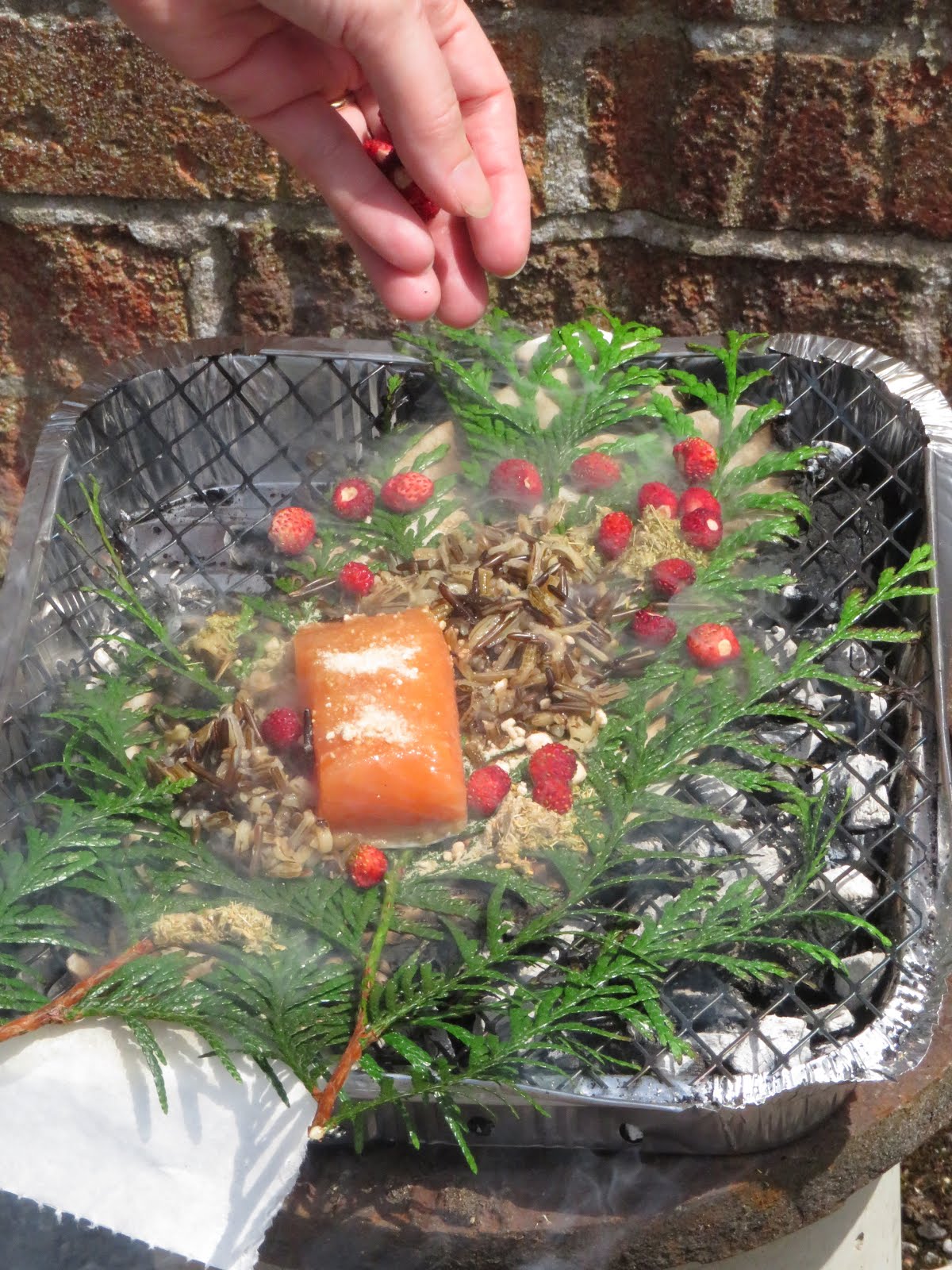


University Health and Safety was not initially happy with the idea of smudging or food burning. They had never seen it before, and had ideas of billowing smoke inside the storage area and wafting around Oxford. In the end we invited them to be present, and they were incredibly moved and helpful. Everyone learns from these opportunities.

It felt odd to do these ceremonies without Indigenous colleagues present. I am wary of cultural appropriation, and do not do such things unless there has been a direct request to do so and no way to bring Indigenous people over to do such work. In this situation, I was able to consult with several colleagues from across North America beforehand, and then drew on long experience and teaching from several Indigenous mentors to smudge and send food to the ancestors. The process made me feel more than ever that we need stronger bridges between UK museums and Indigenous communities. Repatriation is one way to build those, and we are now researching the origins of as many remains as possible so they might some day go home.


Thursday, 25 July 2013

The Pitt Rivers Museum, torchlight, dancing--and a challenge


Conference visitors exploring the Pitt Rivers Museum by torchlight...


Last weekend's conference on 'The future of the ethnographic museum' was intense, stimulating--and quite a lot of fun! While, as Michael O'Hanlon noted in his opening remarks, it did seem somewhat of a contradiction to be holding a conference of that title in the Pitt Rivers Museum, I think that the Museum and its staff demonstrated that we have a vibrant way of being an ethnographic museum now, and are leading the way for the future. On Saturday night, conference delegates from all over the world were given torches (flashlights to some of you) and wandered around the darkened displays exploring for themselves, before Jon Eccles' fantastic light show started. Music using the Museum's sound collections dj-ed by Noel Lobley, Nathaniel Mann's live performance, and Rupert Gill's enthusiastic DJ set (which ended in a Bollywood version of an Abba track, and got the the delegates doing a conga line through the Museum displays...) made for an amazing evening.

And then there was Wayne Modest's exhortation that ethnographic museums should actually address the assumptions behind racism...food for thought indeed, and a reminder that what we do may be fun, but it matters.

Monday, 20 May 2013

What visitors are saying about the Blackfoot Shirts Project exhibition

Here are some of the comments from the visitors' book. I've never see so many longer comments before, and people are reading the book and referring to each others' comments too. It's really interesting.


  • These shirts belong to a people who are still in existence. They should be given back. Period. Then get them to make new shirts to display in this museum. It’s nothing to do with how fragile they are. It’s to do with being objects which have deep meaning. Please give them back.

  • Wonderful exhibit but makes me sad that their culture was ever stifled. The shirts should go back- or should they? They were traded; these shirts were not taken to squash the culture but were given as a sign of goodwill that we should ALL learn from.

  • I travelled here from Australia to see the museum and this exhibition after reading about the project. Good luck with it all and congratulations to the project team.
    • Christeen Schoepf, Phd candidate, UNE Armidale NSW

  • This is an amazing and impressive exhibit. I’m an archaeologist specializing in Southeastern (USA) Native American archaeology, and I find this a very touching story.

  • I actually came to the Pitt Rivers to ‘fill time’ as have been here many times over the years. This is why temporary exhibitions are so important, they keep museums alive. I found this exhibition very emotive- I was close to tears. As a conservator who has studied museology in the past- I would hope that at least a long term loan can be organised- I find that people engaging with objects is more important than any ‘small’ amount of damage this may or may not cause. This stuff is alive- it has had a tremendous impact on the Blackfoot people- surely that is more important than having them in ‘dead’ displays- I agree with A.Morton who commented earlier- great if replicas could be made and displayed here- let them have one!  [Shrops.]

Monday, 8 April 2013

Things we have learned from the Blackfoot Shirts Project

Detail, Blackfoot shirt 1893.67.1, Pitt Rivers Museum. 
The membrane under the quill wrapping is visible in the centre of the image.


Today I’m giving a talk to colleagues here at the Pitt Rivers Museum about the Blackfoot Shirts Project. Since most of them have been part of the project—indeed in many ways it has been their project more than mine, I just write the grants and give the occasional shove—there actually isn’t much about it that they don’t know. So, I thought I would talk about what we all learned from the project, in different ways.

For those of you who haven’t been following this, the Blackfoot Shirts Project in a nutshell is: a group of us brought 5 hide and quill and hairlock shirts, collected in 1841, from Oxford back to museums in Blackfoot country, and invited 500 Blackfoot people to touch them. Not surprisingly, amazing things happened, and we are still thinking about responses to the shirts. You can learn more about the project at: http://web.prm.ox.ac.uk/blackfootshirts/

So what did we learn?

Firstly, by spending a lot of time preparing the shirts for travel and then looking at them closely with Blackfoot people, we learned about the shirts: that some of the decorative material is not porcupine quill but bulrush, for instance. We learned about paints and dyes (who knew that blue was from duck poop?). We realized that the quill wrappings on the hairlocks are done over a foundation of some kind of membrane which is slipped over the bundles of hair: pericardium? Vein? We realized that there are the long-dead carcasses of nits still clinging to the hairs. And we realized that the shirts’ histories, before and after collection, are there to be seen: coal dust from the Hopkins’ home, tack marks from being stuck to the walls, bits of red ochre on the inside from contact with men painted for spiritual protection.

We tend to see the surface of objects in museums. It’s only when you spend this much time and energy really, really looking hard that you see beyond that, to the processes of making and storing and displaying that make up an object’s histories.

And we learned that these are not ‘objects’: they are also material forms of spirits, of those who made and used them, and those whose physical bodies are present in the hides, sinew, quills and hair. For Blackfoot people, these are ancestors, not museum specimens.

Having learned this, we think differently about the shirts now that they are back at PRM. We have a stronger sense of stewardship and of Blackfoot people as having ties to the shirts: we feel accountable. We have realized that just because objects enter museums, their lives don’t stop. They can go out and have adventures. One of these very old, very rare, very fragile shirts was used in a ceremony while we were in Alberta. We realized that it might have acquired some sacred paint during the ceremony, and we decided that if that was the case, we would not think of it as damage: it would be a mark of the shirt’s ongoing life. For a museum, that’s learning quite a bit.