Showing posts with label repatriation. Show all posts

Sunday, 24 September 2017

Strawberries and smoke

This summer, I was privileged to spend time with colleagues rehousing the human remains at the Museum’s off-site storage facility. This was necessary as part of the move of collections out of that facility, and also in preparation for repatriating ancestral remains, which we have taken the decision to do. We were working with crania from across North America, many of them culturally modified. Some of them have been at Oxford for centuries. My colleagues and I removed each cranium from its box, enhanced the museum record for the individual, and placed each one in a new box, cushioned with acid-free tissue.

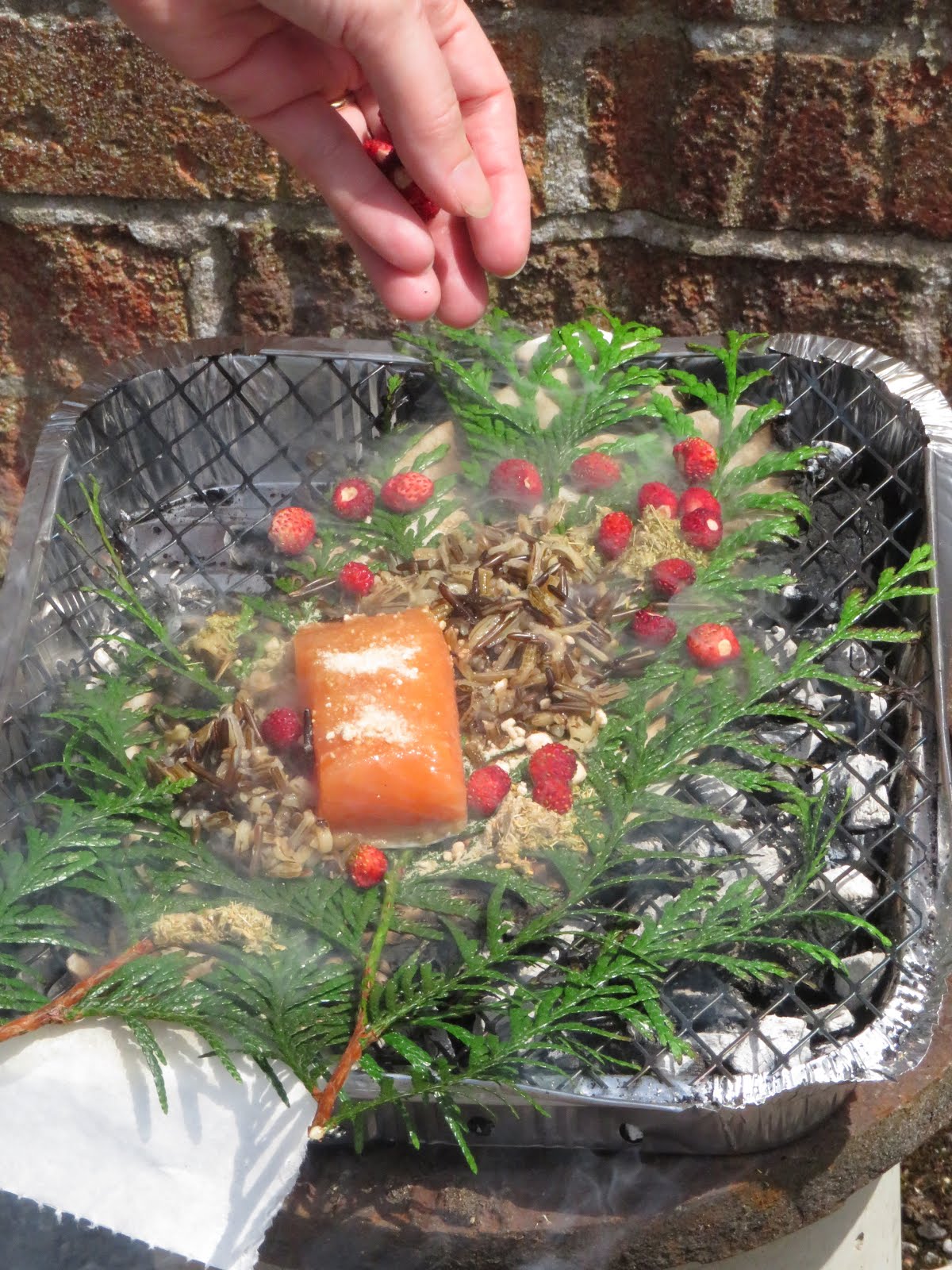
Before we began this work, I responded to requests from Indigenous colleagues and spoke to the spirits of the ancestors. I told them who we were, what we were going to do with them, and why. I told them that their people loved them very much and that we would try to make it possible for them to go home. I thanked them for teaching us as museum professionals and said that we would send food to them through the fire. I used the right to smudge that was transferred to me by Blackfoot ceremonial people and smudged the space to cleanse it. Later, we lit a small barbecue and drawing on Haida cultural ways, sent traditional North American Indigenous foods to the spirits through the fire: wild rice, salmon, maple sugar, wild strawberries.


University Health and Safety was not initially happy with the idea of smudging or food burning. They had never seen it before, and had ideas of billowing smoke inside the storage area and wafting around Oxford. In the end we invited them to be present, and they were incredibly moved and helpful. Everyone learns from these opportunities.

It felt odd to do these ceremonies without Indigenous colleagues present. I am wary of cultural appropriation, and do not do such things unless there has been a direct request to do so and no way to bring Indigenous people over to do such work. In this situation, I was able to consult with several colleagues from across North America beforehand, and then drew on long experience and teaching from several Indigenous mentors to smudge and send food to the ancestors. The process made me feel more than ever that we need stronger bridges between UK museums and Indigenous communities. Repatriation is one way to build those, and we are now researching the origins of as many remains as possible so they might some day go home.


Monday, 4 July 2016

Uneven consultation

Museum anthropologists always look for the politics in the relations between museums and indigenous peoples, the relations of power, what is unsaid as well as what is said. In the last few weeks, there have been several articles in Canadian media sources about B.C. Premier Christy Clark’s call for the return of objects to BC. The most recent ones [http://www.theglobeandmail.com/news/british-columbia/christy-clark-spoke-on-ancestral-remains-without-haida-input-curator/article30637521/] clarified that the Haida nation was not consulted about this call before it went out. The reason that the Haida Nation was deliberately excluded from Clark’s ‘consultation’ process on the repatriation issue is because Clark supports oil and gas development, and the Haida oppose it. Clark’s dramatic call for returns of heritage materials, and ‘consultation’ process, is a means of building an Aboriginal support base in BC despite her intent to proceed with oil and gas development that would permanently damage lands and resources on which Aboriginal people depend for survival. It might also be seen as an attempt to build a support base of non-Aboriginal people who would then dismiss Aboriginal concerns about energy and sovereignty (‘what else do they want? We’ve given them their stuff back!’).

The Haida Nation has the best track record for repatriation of all Aboriginal nations in Canada; they have brought home nearly 500 ancestral remains. They have done so in a thoughtful, respectful way that has enabled them to build constructive bridges with museums. Other Aboriginal nations, and the Province, would benefit from working with the Haida Repatriation Committee to discuss their experience (www.repatriation.ca). Museums and Indigenous peoples can work together productively around repatriation: as I have learned, largely from Haida people, everyone benefits from such relationships. Repatriation is necessary in many cases. Getting material heritage circulating through loans is also necessary: many Aboriginal communities don’t have facilities to care permanently for material heritage, but access can be provided in many ways. And whatever stance one might take on the oil/gas industry, access to heritage items is too important to Aboriginal survival to be caught up in this kind of political game.


If Premier Clark is serious about providing access to material heritage held in museums outside the country for Aboriginal peoples, I would invite her office to consider funding the first loan from UK museums to the Haida Gwaii Museum. There are important early historic collections of Haida material heritage in the UK, and we need to find a way to make them accessible to Haida people. To get rolling, this project will need between £15-20K to pay for standard loan fees (c.£6K to Haida Gwaii), a new case for the Haida Gwaii Museum that provides enhanced environmental controls and security for international loans, and time and costs for a museum staff member to stay for a few weeks and facilitate handling sessions out of case before placing the item on display. Once the program is up and running, it will be much less expensive to run. Objects can be rotated every few years and can provide access to the tens of thousands of B.C. Aboriginal artefacts in museums around the world, while strengthening relationships between those nations and museums to improve public interpretation. 

Everyone needs access to material heritage. Let’s find creative solutions that strengthen relationships in the process.

Saturday, 4 July 2015

Frank and the pipe

Curators who work with Indigenous communities find themselves in between contradictory expectations and needs from their museum colleagues and community members. This is never a comfortable place to be, but it can be a space for learning.

Museums assume that physical preservation is the key goal for collections. Access to collections is also a key goal, but ‘access’ is usually defined as exhibition [behind glass], or through online images and information [digital/visual access] is sufficient, enabling them to continue to privilege physical preservation of objects.

These forms of access are insufficient for many Indigenous communities, especially regarding sacred items. People need to touch items to reconnect with ancestral knowledge and to strengthen identity in the present. People need to pray with sacred items to strengthen communities in the present. When access is denied by museums to such items, communities call for repatriation.

Blackfoot people have worked tirelessly for decades now to repatriate sacred items for use in ceremonies. Pipes, sacred bundles, and many items have been recovered and are used and cared for. The ceremonies in which these items are used have been passed down even through the most difficult eras. A great deal of love and self-sacrifice goes into caring for sacred items: you have to behave respectfully around them, pray with them daily, run the home in which they are kept very carefully.

And these items give back to the community. Sick people are brought up to them to be blessed during ceremonies. People ask the spirits associated with sacred items for strength, for healing, for help. People who did not grow up speaking Blackfoot learn the language in order to participate in ceremonies and to care for sacred items properly. Young people who might get into teenage trouble choose to join the sacred societies and learn and practice traditional values and ways of life instead.

Many items used in Blackfoot ceremonies now have been repatriated from museums, and still have their museum accession numbers painted on them.  When I am able to attend ceremonies, I note these numbers with some amusement, and with a poignant sense of rightness: things are back in their right place, where they are understood and loved. These ceremonies are what the government and the churches tried to stamp out. The transfer of sacred items out of communities and into museums was part of that process of enforced assimilation. The transfer of such items back into community hands has been part of the healing process for Blackfoot people.

One time I was at a ceremony and the late Frank Weasel Head was assisting with it. At a certain point in the ceremony he came outside the tipi in which the ceremony was being conducted, holding a sacred pipe, to pray with it outdoors. The pipe looked to my curatorial eyes to be 18th century: it was wrapped in long braids of porcupine quills and was one of the old, long-stemmed ones. Frank’s hands were covered in red paint, made of bison fat and red mineral ochre, for spiritual protection, which is part of Blackfoot ceremonies. For a moment, my curatorial self fretted: he’s getting paint and fat all over the quillwork! We’ll never be able to clean it! That’s an 18th century pipe, it should be in a museum!

And then I saw the number painted on the side of the pipe. It had been in a museum. It had come home. Frank was using it for precisely what it had been made for. He was praying with it. He was praying really hard, begging for help for the sick people at the ceremony, thanking the Creator for life, thanking the beings who had brought us all together for the ceremony, asking for strength for everyone. Suddenly my mind shifted, and I understood that he was using the pipe with incredible respect and with tremendous love: that this was the right way to handle the pipe. The paint on the quillwork was evidence of that respect and love: it was not damage. It was very humbling. He was praying very intensely, and I didn’t think he saw me, which felt right, as I was a visitor and felt lucky just to be sitting on the outside edge of things. I didn’t want to distract him from important work for his own people.

After the ceremony, Frank sought me out. It had been a long day for him and he was very tired, but he marched up to me, grabbed me by the shoulders, shook me gently, and said: ‘Now do you understand why sometimes, some things have to come home?’ He had seen me, and he had seen that shift in my perception. I am grateful to him. I have never looked at museum objects in the same way since.

Every time I see things in the museum, I wonder whether the communities they come from have ever seen them since they left. I wonder how to bring things back together with the communities they came from, and think about how much might be achieved by doing so. They don't all have to leave the museum, and they don't have to leave forever. There are so many possibilities.