Showing posts with label new museology. Show all posts

Tuesday, 6 November 2018

Wild Rice wars: curating from a different place


Since last May, I have been curating for the Pitt Rivers Museum from a very different place. I am now based in Canada, and respectfully acknowledge that my home is on the treaty and traditional territory of the Mississauga Anishinaabeg near Nogojiwanong (Peterborough), in Ontario. Territorial acknowledgements such as this are common at universities, museums and government offices. They are used to open meetings and conferences, to greet and orient visitors to museums, to remind people that Canada is in the fraught process of trying to acknowledge and do something about its colonial heritage.


Wild rice in winnowing tray. Image from Black Duck Wild Rice.

This really is a fraught process. Last weekend, 300 people crowded into a local hall near my home for an acrimonious meeting called by a local association of second home owners. They are irate that an Anishinaabe man has been seeding wild rice on their lake and harvesting it with commercial equipment. The expanded rice beds clog the waterways for motor boats and have changed the clear, rocky waterscapes familiar to and beloved by cottage owners. Wild rice, manomin, is an ancient staple of Anishinaabe diet but rights to harvest it have been unclear under historical treaties and contested by settlers. The rice harvest, just finished, has raised these disputes again. Tensions have been very high over the past decade in this region about the wild rice issue, so much so that the issue has been described as a war in some media. Anishinaabe author Drew Hayden Taylor has written a play, now touring with a major Canadian company, called “Cottagers and Indians” about the issue. The “Save Pigeon Lake” website, put up by cottage owners, is uncompromising in its demand for the removal of the rice beds and cessation of Indigenous harvesting. 


Pitt Rivers Museum 1939.6.9.1,2.

So what do we do in the UK with collections that reference such local political tensions? The Pitt Rivers Museum holds a wooden mortar and pestle (accession number 1939.6.9.1,2) collected by staff anthropologist Beatrice Blackwood in 1939 in Minnesota. Someone has written the word “potogan” on one side of the mortar: boodaagan, the Ojibwe (Anishinaabemowin) word meaning a mortar for wild rice. The tools are not polished, not finely made, but are smoothed with use. They’re not especially beautiful or decorative. They’re powerful, though, speaking to long traditions of harvestingmanomin, and to the politics of resource use around the Great Lakes. The meeting near my new home is just the latest manifestation of such settler colonial attempts to control and eliminate Indigenous peoples, another long tradition experienced by Anishinaabe people.

As the equivalent of territorial acknowledgement, could museums in the UK (and in Canada) acknowledge colonial histories and their legacies, the struggles around the materials museums display? Saying ‘Ojibwa,’ ‘wild rice mortar and pestle,’ ‘wood,’ ‘collected by Beatrice Blackwood’ doesn’t seem enough. Such language denies history and politics and the roles of museums within these. Perhaps we could say, ‘Mortar and pestle for processing wild rice (manomin), Ojibwe (Anishinaabeg) people, Minnesota. Collected by Beatrice Blackwood, 1939. Settlement and treaties with British, Canadian and American governments have made it difficult to harvest this nutritious traditional food today.’ Even something as simple as a single contextual sentence in a label is key to shifting historical collections into the space of ongoing community ties, politics, and meanings.


On the Kawarthas wild rice controversy, see:

Clifford Skarstedt, https://www.thepeterboroughexaminer.com/news-story/9004961-more-than-300-attend-public-meeting-over-concerns-about-wild-rice-planting-in-the-kawartha-lakes/, 4 November 2018.

Sunday, 24 September 2017

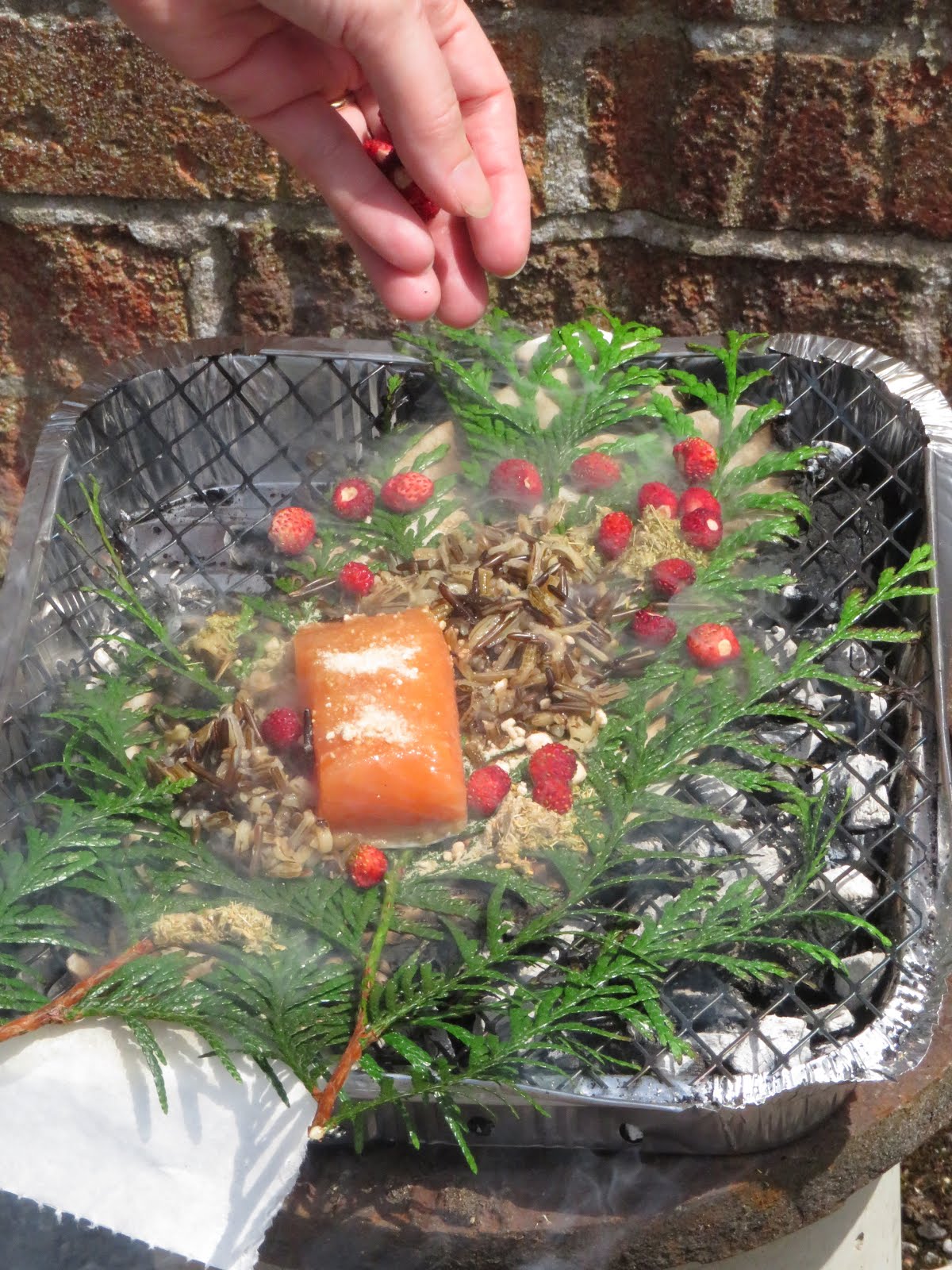
Strawberries and smoke

This summer, I was privileged to spend time with colleagues rehousing the human remains at the Museum’s off-site storage facility. This was necessary as part of the move of collections out of that facility, and also in preparation for repatriating ancestral remains, which we have taken the decision to do. We were working with crania from across North America, many of them culturally modified. Some of them have been at Oxford for centuries. My colleagues and I removed each cranium from its box, enhanced the museum record for the individual, and placed each one in a new box, cushioned with acid-free tissue.

Before we began this work, I responded to requests from Indigenous colleagues and spoke to the spirits of the ancestors. I told them who we were, what we were going to do with them, and why. I told them that their people loved them very much and that we would try to make it possible for them to go home. I thanked them for teaching us as museum professionals and said that we would send food to them through the fire. I used the right to smudge that was transferred to me by Blackfoot ceremonial people and smudged the space to cleanse it. Later, we lit a small barbecue and drawing on Haida cultural ways, sent traditional North American Indigenous foods to the spirits through the fire: wild rice, salmon, maple sugar, wild strawberries.


University Health and Safety was not initially happy with the idea of smudging or food burning. They had never seen it before, and had ideas of billowing smoke inside the storage area and wafting around Oxford. In the end we invited them to be present, and they were incredibly moved and helpful. Everyone learns from these opportunities.

It felt odd to do these ceremonies without Indigenous colleagues present. I am wary of cultural appropriation, and do not do such things unless there has been a direct request to do so and no way to bring Indigenous people over to do such work. In this situation, I was able to consult with several colleagues from across North America beforehand, and then drew on long experience and teaching from several Indigenous mentors to smudge and send food to the ancestors. The process made me feel more than ever that we need stronger bridges between UK museums and Indigenous communities. Repatriation is one way to build those, and we are now researching the origins of as many remains as possible so they might some day go home.


Friday, 9 June 2017

The Great Box goes home

Recently, I attended a potlatch on Haida Gwaii in which a respected activist, artist and political leader stepped into the clan chieftainship of the Ravens of Skedans. Although I have worked with Haida people since 1998 and made many trips to Haida Gwaii, I had never before had the opportunity of attending a potlatch. And while anthropology lecturers at Oxford have taught about “the potlatch” for over a century, based on anthropological literature, none had ever been invited to attend a potlatch as a witness. So I went to “honor the invitation,” as the Haida say; I went to show respect for the man who has become Chief Gidansta and his family; I went to renew relationships with many Haida people; and I went to see the new version of the Great Box, the Great Box’s child, being used in a potlatch, as it was originally meant to be used.

In anthropological terms, a potlatch is an event involving a change in status or identity: a wedding, a funeral, an adoption, becoming a chief. The host clan invites, feasts and presents gifts to guests, who witness the business conducted and not only provide collective support for it but are also responsible afterwards to witness and affirm the identity of the person(s) at the centre of the business. In my case, I affirm that Guujaaw is now Chief Gidansta, and I was with about a thousand people who saw it done, so it’s true. The host clan’s specific crests are displayed and affirmed, told through stories and dance and song, reminding people which crests belong to that clan. A totem pole, also with the clan’s specific crests, may be carved and raised to commemorate the event. History is re-told in art and dance, and added to.

I had been told that the Great Box’s child would feature in the potlatch in some way. As a curator, I see masterpiece-level Haida art sitting on shelves, held motionless in displays by elaborate supports, or wrapped in tissue paper in acid-free boxes. I’ve learned that when such items are performed by Haida people—old masks brought to the face and danced, ancient hats worn on the head, gambling sticks used to gamble with—something very special happens. This was initially a source of tension (as a curator, aren’t I supposed to keep things physically safe?), but I’ve had excellent Haida teachers, and have learned to treasure these magical moments when long-dormant treasures come to life. Those moments of cultural renewal and continuity are precisely what the 1884 revisions to the Indian Act that made the potlatch illegal, tried to kill. The historic Great Box was removed from Haida Gwaii, along with nearly every other masterpiece-level treasure, during the years of missionisation, assimilation policies, and residential schools. That’s how most of those ancestral treasures that I see sitting on shelves got to Oxford. Those rare, magical moments when items are danced, when they move, when they are lovingly held by Haida people, affirm that although hearts were often broken during those years, Haida culture was not. If it went quiet, like the masks on shelves, it has been woken again and is dancing.

What happens when a long-absent masterpiece comes home? And what, I wondered, would happen when it was used in a potlatch, mending part of the rupture in Haida cultural history that the collection of the historic box, its removal from Haida Gwaii, was part of?

The new box sat in front of the chiefs’ table, beside the podium and near an ancient clan box borrowed from the American Museum of Natural History in New York for the occasion. It was flanked by coppers, witnessing and framing the events, placing this potlatch within an ongoing history of potlatches by the host clan. Front and center in the action, the Great Box’s riveting design was echoed by the designs on the chief’s seat and the banner behind the chief’s table, taken from sibling boxes identified by Gwaai and Jaalen Edenshaw as having been made by the same artist. The meal was served to the chiefs by host clan members who made their way around the box, carrying plates and coffee pots and water jugs. People came up during lulls in the action and visited with chiefs, admired the boxes, took pictures; occasionally someone came and spent a long time going around every side of the box, mesmerized. At the pivotal moment in the ceremony, the new box was used as it was meant to be: as a box of treasures, from which the new chief’s regalia was unpacked by his family as they lovingly dressed him during that moment of transformation.

It was where the historic box was meant to be, if it had not been removed from Haida Gwaii. The new box sat, powerful and beautiful, between chiefs and coppers and dancers, hearing Haida language and song, watching the aunties visit, admiring the excellent pies, smelling seafood. At one point, a toddler being given her Haida name danced to her naming song in front of it, bouncing up and down in a room filled with love and happiness. The Great Box took it all in. There was no hole in the room where it should have been. The Great Box’s child has come home.

The Great Box Project through which the new box was made was funded, in part, by UK research funding, for which I have to monitor the impact of research on the public. Impact is defined as "the demonstrable contributions that excellent social and economic research makes to society and the economy, and its benefits to individuals, organisations and/or nations," which can include "influencing the development of policy, practice or service provision, shaping legislation, altering behaviour," and "capacity building through technical and personal skill development."  

While I don’t have any difficulty with the concept of accounting for the use of public funds, I do wonder how to describe the impact of the Great Box’s return in such terms. Where does “mending ruptures caused by colonial processes” fit in such discourse? How would we measure it? How does bringing such a masterpiece home and using it as it was intended to be used fit into such registers of language? How do we translate the concepts of healing and cultural strength into “benefits to individuals, organisations and/or nations”?

I am struggling to find the right words. Whether I find them or not, my respect goes out to the Ravens of Skedans and to Gidansta and his family for their generous hosting at this most extraordinary feast, and to artists Gwaai and Jaalen Edenshaw for creating such an extraordinary work. Haawa’a, haawa’a, haawa’a.


The new Great Box being admired at the potlatch, March 2017. Photographer: Laura Peers.


Impact is defined at: http://www.esrc.ac.uk/research/impact-toolkit/what-is-impact/ 


Thursday, 13 August 2015

Visiting the Great Box at home


Haida Gwaii, July 2016. Photograph by Laura Peers.

When there are long-term, established relationships between museums and communities, grant-funded projects enable both partners to fulfil key goals, take things in new directions, and spend time together to renew and strengthen ties. The Great Box project is a wonderful example of this.

The Haida Nation and the Pitt Rivers Museum have worked together since 1998, and formalized their relationship in 2009 with the visit of a very large Haida delegation to PRM to work with all 301 Haida objects and establish permanent relationships around the collection for mutual benefit. In 2010, PRM returned an ancestral remain to Haida Gwaii. Artists have come to PRM each year to learn from the collections and to teach Museum staff. Educational programmes at PRM have benefited tremendously from input by Haida curators and artists over the years.

Gwaai and Jaalen asked to do the Great Box project to learn from the historic artist and take that knowledge home with the new version of the box. The new box was shipped home for completion in October 2014 and immediately sparked many conversations amongst artists. It was also used to teach box design to high school students, and a formal unveiling event was held for it at the Haida Gwaii Museum in March. It has been on display there since.

With support from the ESRC Knowledge Exchange Dialogues fund and Linacre College, I was able to visit the box at home in Haida Gwaii last month, and catch up with Jaalen, Gwaai and other Haida friends and colleagues. Jaalen and I did a presentation to community members in the inspiring Performance Space of the Kay Llnagaay HeritageCentre adjacent to the Haida Gwaii Museum. Many people made the hour-long drive from Masset to see the box again and to discuss what we had learned from the project.

Laura Peers (R) and Jaalen Edenshaw (at R by box) in discussion with community members about the
Great Box project, July 2015. Photograph by Geoff Horner.

I also worked with Nika Collison, curator of the Haida Gwaii Museum, to begin planning another series of projects that comes out of the Great Box: an exhibition and book about Haida traditions of box-making. Nika kindly asked many community members if they would talk to me about this and I spent much of my time on island having great discussions with extremely knowledgeable people, from senior artists to a man who makes bentwood box coffins for community members to a woman who brought box-making into a program for youth. Everyone was extremely supportive of taking the project into these directions, and we also talked about how to make the process most useful for Haida artists. We hope to find funding also to hold workshops associated with this next step in which people can view historic boxes, talk about what makes great box design, and actually make boxes. The project needs to fulfil community needs and goals to take the relationship forward. There are many ways such activities would also benefit both museums involved.

We also talked about the major implication to come ‘out of the box’ from the Great Box project: the need for more artists to have direct access to more historic treasures so that this scale and depth of knowledge repatriation can happen. That’s what I’ll talk about next.


Friday, 15 November 2013

All in a day's work

I am exceptionally fortunate to work with colleagues in collections management and conservation who are so experienced in facilitating research with indigenous peoples. We are currently preparing for the visit next week of a Maori delegation from the Ngā Paerangi iwi. They are coming to reconnect with taonga ('tribal heirlooms') in the collections of the Pitt Rivers Museum.

We have spent the past few weeks setting up the visit with Michelle Horwood, a doctoral student from New Zealand who has organized the delegation. Michelle has advised us on Maori protocol and how it might shape our welcome of the group, the way the research visit might work, the difficulties we might encounter, and the special things we might need to consider to make things go well.

We have found a suitable bowl to hold water for ritual cleansing, and will find a way to place that near the research space. We have thought about how to structure the welcome in such a way that it respects Maori expectations and meets our needs for the sharing of information about the week. We have drafted student assistants to act as helpers and tour guides. We have warned colleagues that our visitors may weep, sing, and wail as they encounter ancestors in the form of taonga, and that this is part of the process of the visit, along with joy and quite probably a certain amount of bewilderment.

Everyone has pitched in for this. Everyone will, next week. It’s an amazing feeling to work in a place where this is just what we do. Yes, we have had a fair bit of work to feel like we understand what needs to happen and yes, some of this will have to be worked out as we go along—but no one questions the need to work with Maori cultural protocol or the diplomatic, very special nature of this visit. It seems like the entire institution ‘gets it’, which is a rare museum indeed. I teach on these aspects of museum anthropology, but this visit is not being organized by me: it’s everyone in the museum, and I'm just showing up to welcome our guests and then learn. Which is, really, what we’ll all be doing next week.


Just saying this is a great place to be, and a privilege to work here.